View Cart
Sub-Total: $0.00

I saw a comment on a LinkedIn post the other day by Prof. Wolfgang Feist – founder of the Passive House Institute. He listed three strategies to keep our buildings healthy. They’re so simple – so let’s discuss.
Please note this article is targeted towards construction in colder climates. For advice on hot, humid climates please enquire.
Buildings do not like baths. Bulk water (rain leaks) is the number 1 reason for durability issues in buildings.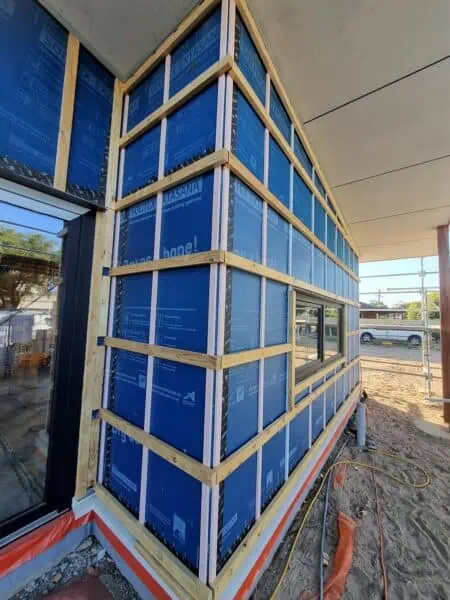
Because we now have more insulation in our buildings, the movement of heat has changed. Our wall assemblies are not as forgiving as they used to be back in the day. In a leaky, uninsulated 1950s house, heat loss (heat transfer) would dry out a damp stud. In a 2026 high-performance wall, that energy transfer isn’t there. Because energy efficiency!
So what’s the solution?
Weather Resistive Barriers.
Install your high quality Weather Resistive Membrane (WRB) as soon as your frames are up. This protects the timber from the weather during construction, as well as from wind driven rain leaks during the life of the building.
Because the cladding is not the weather barrier. We assume the cladding will leak. The membrane is your second layer of defence behind the cladding.
If a building can’t dry, it doesn’t matter how good the R value in the wall is.
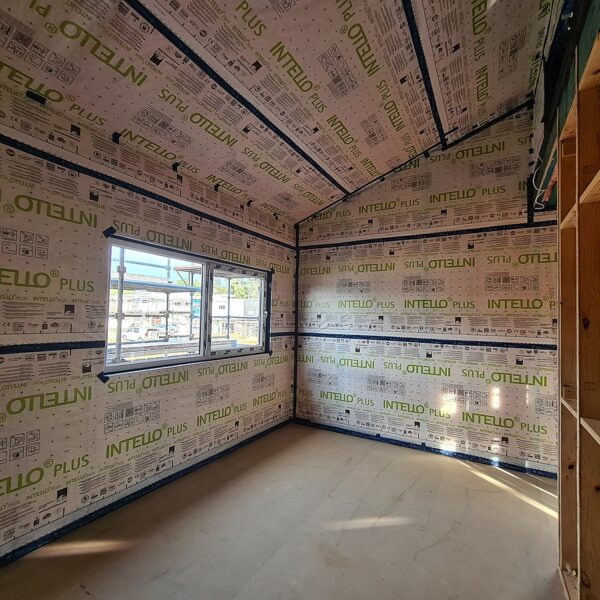 Keeping humid air out of our cavities is the next one. Air carries moisture with it, and if the relative humidity and surface temperatures inside your wall hit that perfect combination, the inside of your wall will start crying. This is called interstitial condensation.
To reduce the risk of this happening in cold climates, where we generate a lot of moisture inside as humans (cooking, bathing, washing, breathing etc), we need an air tight building envelope on the inside. This stops humid air from inside our homes being transported inside our walls and roof cavities. If there is an internal air tight layer, the risk of condensation reduces dramatically.
Air tightness is so often talked about in the context of saving energy and air conditioning expense, which is correct. However air tightness is also very much about protecting those cavities from moisture.
(Remember to ventilate right if you build tight!)
“It doesn’t matter how wet a building gets, as long as it can dry” – Dr Joe Lstiburek.
Even if we’re really vigilant and do all the right things during construction, there’s still a risk that some form of moisture might find it’s way into the structure over the life of the building.
So the last tip is to use materials on the outside of your wall that are vapour open so that moisture can escape.
Moisture is always looking for equilibrium and moves from high to low, so ensuring that our external walls are vapour open means that internal high vapour load can safely move out and the building can dry.
So in summary, to make sure your buildings are durable you need to:
Protect from rain;
Build air tight to protect cavities from vapour; and
Allow drying via outward diffusion.
In other words, keep our buildings dry.
Although we are definitely chasing good energy efficiency and thermal comfort, more insulation means shifted drying cycles and building physics must always be considered.
The durability and health of your building is more important than the energy efficiency and this means managing moisture effectively in all it’s forms.