View Cart
Sub-Total: $0.00


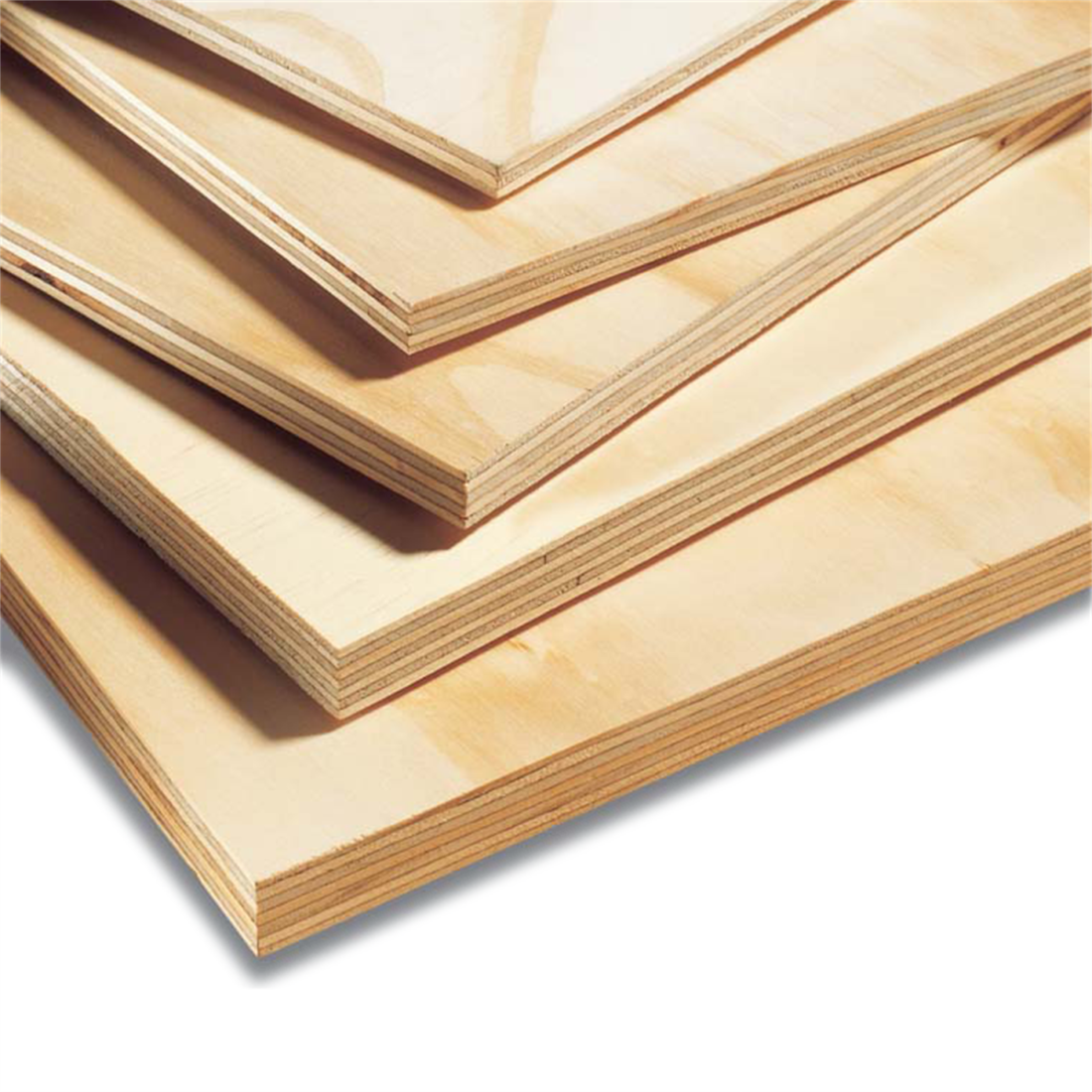
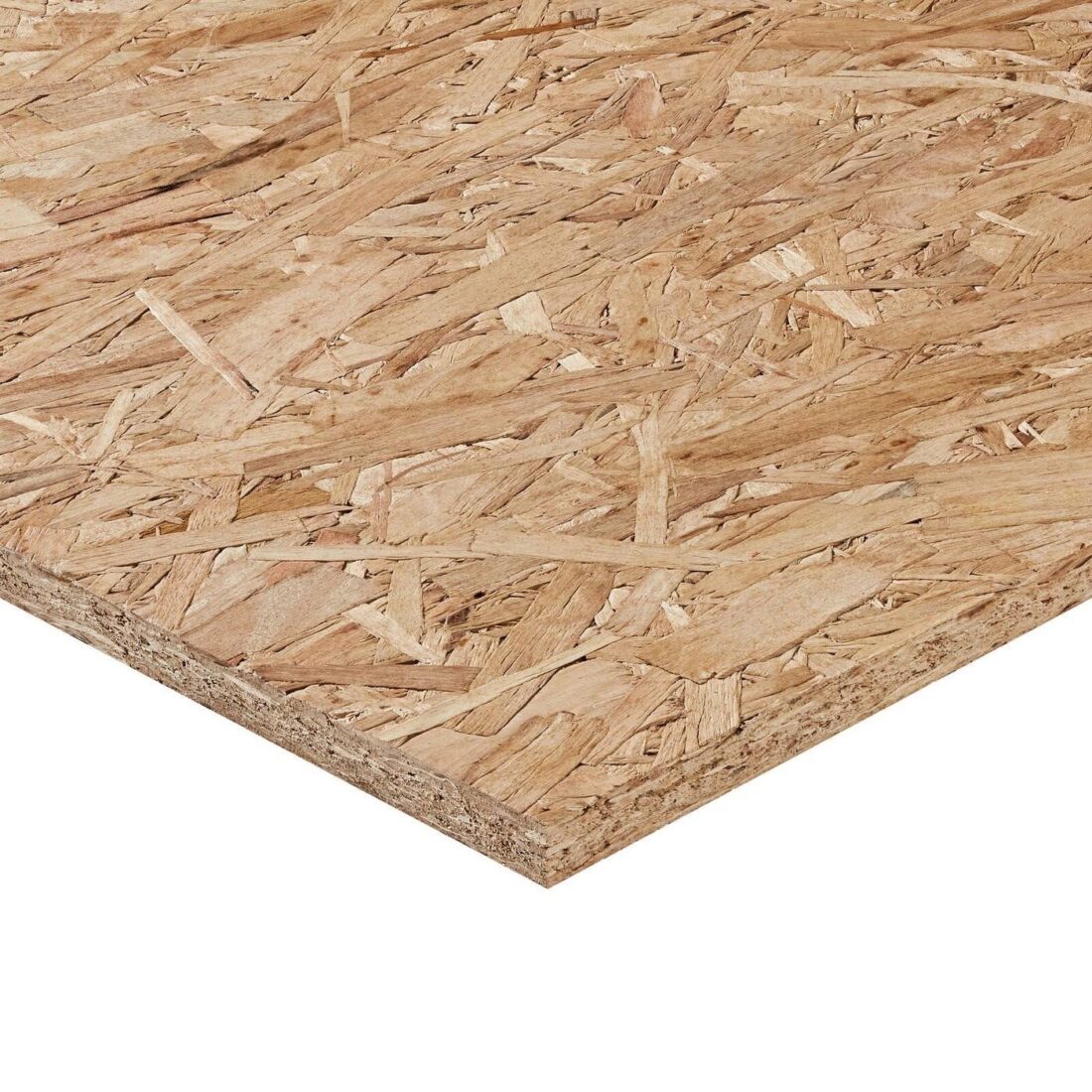
We’re revisiting the ply vs OSB Great Debate!
In Part 1, we explored whether plywood or OSB is safer from a moisture and vapour perspective beneath roof membranes.
Following that post, James Cornell (former Director of Life Panels) reached out to share a deep-dive comparison matrix he has compiled, to go even deeper into this evaluation in a broader context, so James and I have co-written this article to share this information with you.
You can find the download link to James’s comparison matrix at the bottom of this page.
To begin, it is important to note that neither “ply” or “OSB” represents a single product. They are names of broad categories encompassing different grades, resin formulations, timber species, manufacturing densities and a range of other important characteristics. This article will expand on part 1, discussing specifics.
The last article recommended that you have your materials tested so that you have accurate data to use in a hygrothermal simulation. Here’s why you should do that.
Let’s look at the WUFI database for a second
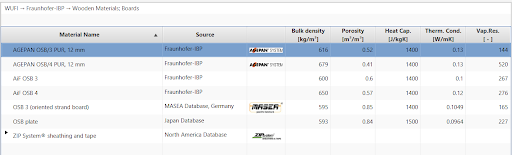
Recent WUFI software updates reflect this complexity, expanding database options to 15 plywood and 7 OSB options – each with distinct hygrothermal behaviour.
7 options for OSB in WUFI
There are only 4 different types of OSB board (1-4), however 7 different versions listed here so that in itself tells us that there are variations within those 4 types.
15 different types of ply in WUFI
Plywood is made out of around a dozen different species of timber, but the species of each ply material is not made clear in this list, except for one that mentions “beech”.
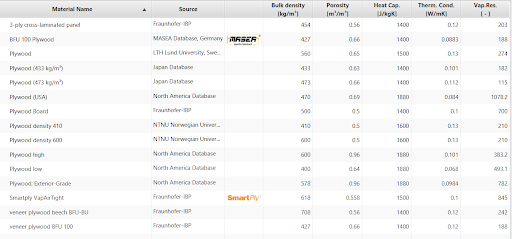
The right hand columns in the above screenshot show a selection of the characteristics that all play a role in the overall performance of the chosen product, additionally, thickness of the product used also plays a mediating role in the performance!
Before we go on, what do those numbers even mean? They are not an exhaustive list!

So now that you have some introductory insight into the above, you can see how selecting the incorrect material in WUFI could give you incorrect results.
In addition, neither of these tables give enough information about exactly what material you are selecting, e.g. with the ply options, is it furniture grade ply? Bracing ply? Form ply? Then you need to ask yourself, is it an appropriate material and what is it being used for? Is it even in the correct position within the assembly to balance performance and risk mitigation?
For example in the first article (link here) it was mentioned that ply (as a general product category) may be a better substrate for vapour-permeable membranes. However, for this application, it is unlikely you would choose a high-cost furniture-grade Birch-faced ply wood or a 4mm bracing ply, but you may choose from a form ply, a weather and boil proof (WBP) ply, OSB3 or OSB4 or even rigid wood fibre board. It is at this point we need the context of the project and what job this product is actually intended to do when used in a specific location of the build up? Beyond that, is it even in the appropriate position within the build-up to achieve balance between performance and risk mitigation?

Some Key Material Differences
If we can clearly define what material we are using, then we can use test methods that provide us some degree of insight as to its behaviour. Then we can more easily see how other variables such as these listed below, may affect our intended outcome.
Substrate Classification
Density
Vapor Openness and Airtightness
Thermal Buffering

Having said all of this…
As complex as all of this seems, most projects are likely to perform well with a standard mid-range option of either board, if the wider context of an appropriate construction method is applied and their location in the building fabric considered. OSB/3 and bracing ply are generally the most common products used on residential projects.
Once you start designing for high energy efficiency, airtightness or moisture resilience though, understanding the properties of the actual materials you are building with becomes essential. Particularly if you want an accurate hygrothermal simulation done.
Although Part 1 of this article showed preference for “ply” over “OSB”, neither product is inherently better or worse on their own. What matters is whether their specific limitations and strengths suit where they’re going in the wall or roof build-up, and everything that placement depends on: practical application, cost, performance characteristics, location. So when it comes to deciding which material to use, ask yourself three questions:
Then request technical data sheets for the specific product in your assembly and give it to your WUFI professional
The best approach is due diligence: check the manufacturer’s declarations and test reports, test assumptions through a reputable tool like WUFI, and understand the results well enough to act or refine them, not just accept them. That means evidence-based decisions built on more than theory or software alone; real-world, practical experience has to be part of the answer too.
Written by Jessica Kismet and James Cornell
Click here to download James Cornell’s complete OSB vs. Plywood Comparison Matrix
That’s all for now folks
Remember, you can always get in touch with us to talk anything building science!
Cheers!
Jess