If you build in South Australia, NCC 2025 does not apply to you yet. It starts here on 1 May 2027, and NCC 2022 applies until then, but I would not wait until April next year to learn the new condensation rules. Plans drawn today will likely be built after that date, and the changes affect how you detail walls and roofs.
Why the code is changing
Condensation is water that forms when warm, moist air meets a cold surface (think beer can). When this happens inside a wall or roof assembly you cannot see it. Over time it can feed mould, rot timber and wet insulation. Better insulation and more air tight houses have made this more common, because better insulation keeps the outside of the wall colder and a tighter house holds more moisture inside. NCC 2022 started to deal with this and NCC 2025 goes further.
What is changing
This is based on Part 10.8 of the adopted NCC 2025 Housing Provisions. Read the full clauses and tables before you rely on it – the link to the new NCC 2025 Housing Provisions is here:
Climate zones 6, 7 and 8 (the cooler zones – we have climate zones 4, 5 and 6 in South Australia): external walls need a drained and vented cavity, with a few exceptions (single skin masonry, single skin concrete and insulated sandwich panel walls such as SIPS). It must be at least 12 mm deep, with vents at the top and bottom of each storey. A cavity is a gap behind the cladding. It decouples the cladding from the structure and the purpose is to let water drain out and air move through, so the wall assembly can dry and mould risk is minimised.
Vapour permeance means how easily water vapour passes through a material. In climate zones 6 to 8, any layer between the cladding and the outside of the main insulation (usually a building membrane) must be very vapour permeable (Class 4). The numbers remain the same as NCC 2022, but a wall with no cavity is now not allowed in climate zones 6-8. In zones 4 and 5, the requirement is the same as before for walls with a cavity. Walls with no cavity now need the higher Class 4. I know this must all sound confusing… For the full table, see thecondensation provisions.
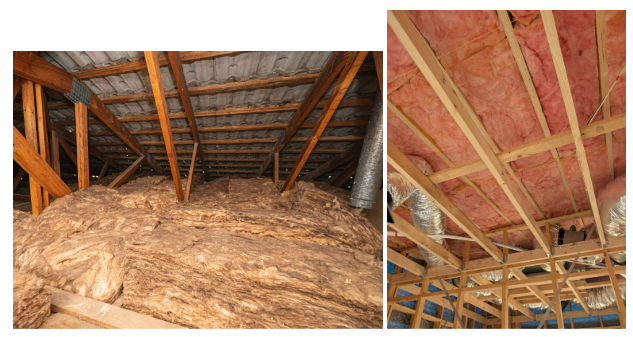
Roof space ventilation: NCC 2022 already requires roofs to be ventilated in climate zones 6 to 8, but NCC 2025 now determines this requirement based on where the insulation is. NCC 2025 now considers there to be two types of roofs:
Where the primary insulation is parallel to the roof (roof void becomes part of the conditioned space or skillion ceiling – image on right – Credit Callery Building
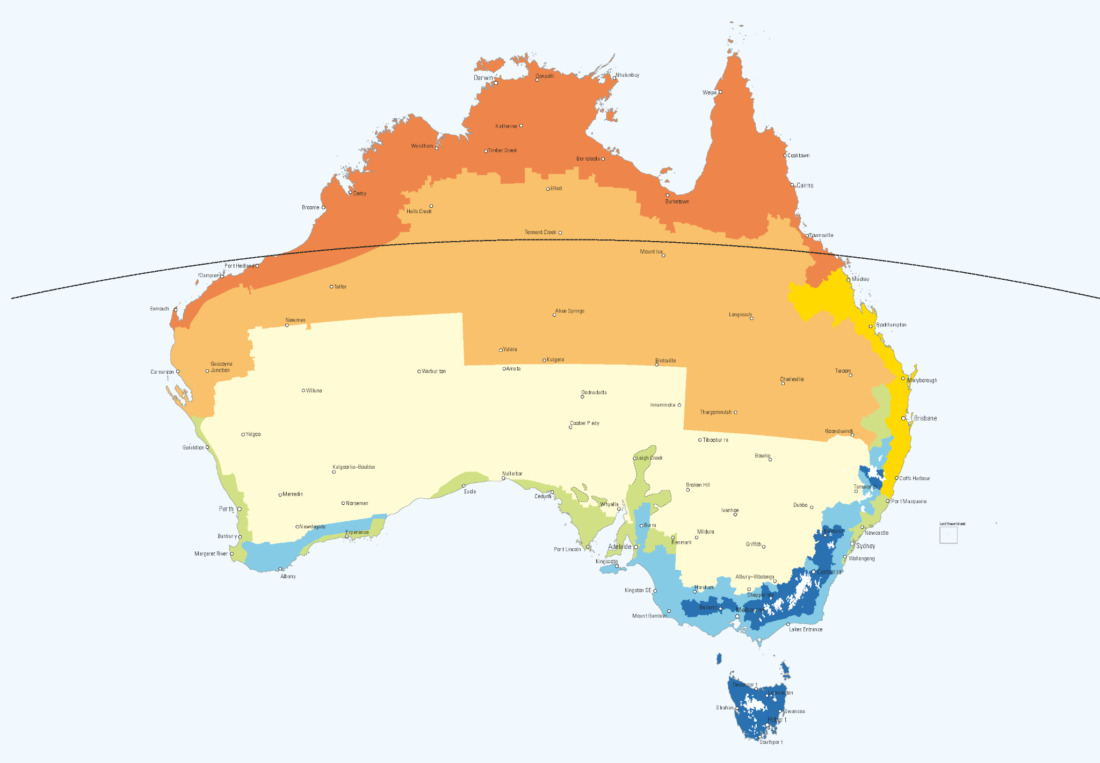
As you may have picked up, all of these rules are climate dependent so you need to know the National Construction Code climate zone for your project before you can finalise details.
In South Australia, the cavity and roof ventilation rules in this article apply in climate zone 6, which covers the Adelaide Hills and the South-East. Adelaide is in zone 5 and the arid north is in zone 4. In those zones, the cavity and roof rules do not apply, but a wall with no cavity now needs a Class 4 membrane instead of class 3.
If you are not sure which climate zone your site is in, use the ABCB climate zone map. Do not guess!
What you can do now if these changes affect you:
Ask your designer for cavity details early. Cavities change the wall thickness, the fixing of cladding, and the flashing at windows and doors. These are hard to fix after the frame is up.
Treat the wall wrap as a system. Wrap, tapes, flashings and penetrations all need to be installed as the manufacturer says. A good membrane with a big tear in it or a tape that comes unstuck does not do much.
Check that the product is rated. Look at the data sheet for the vapour permeance class. Ask your supplier if the number is not there.
Keep exhaust air out of the roof space. NCC 2022 already says exhaust fans must discharge to the outside. A fan that blows into the roof is a common cause of wet insulation and mould and has been against the code in SA since October 2024 so if you are exhausting to the roof space, take heed!
Talk to the client about cost and time. A cavity adds material and labour. It is easier to explain before the quote than after.
What this means for you
None of this is new building science. Walls that can drain and dry last longer, and the code is now catching up. Builders who start early will spend less time on rework, and will have fewer callbacks about damp walls.
If you want to talk through a wall build-up for a current job, get in touch with me at Climasure.
Our goal is to improve the comfort, health and energy efficiency of buildings across Australia by offering solutions that protect both the environment and the structure.